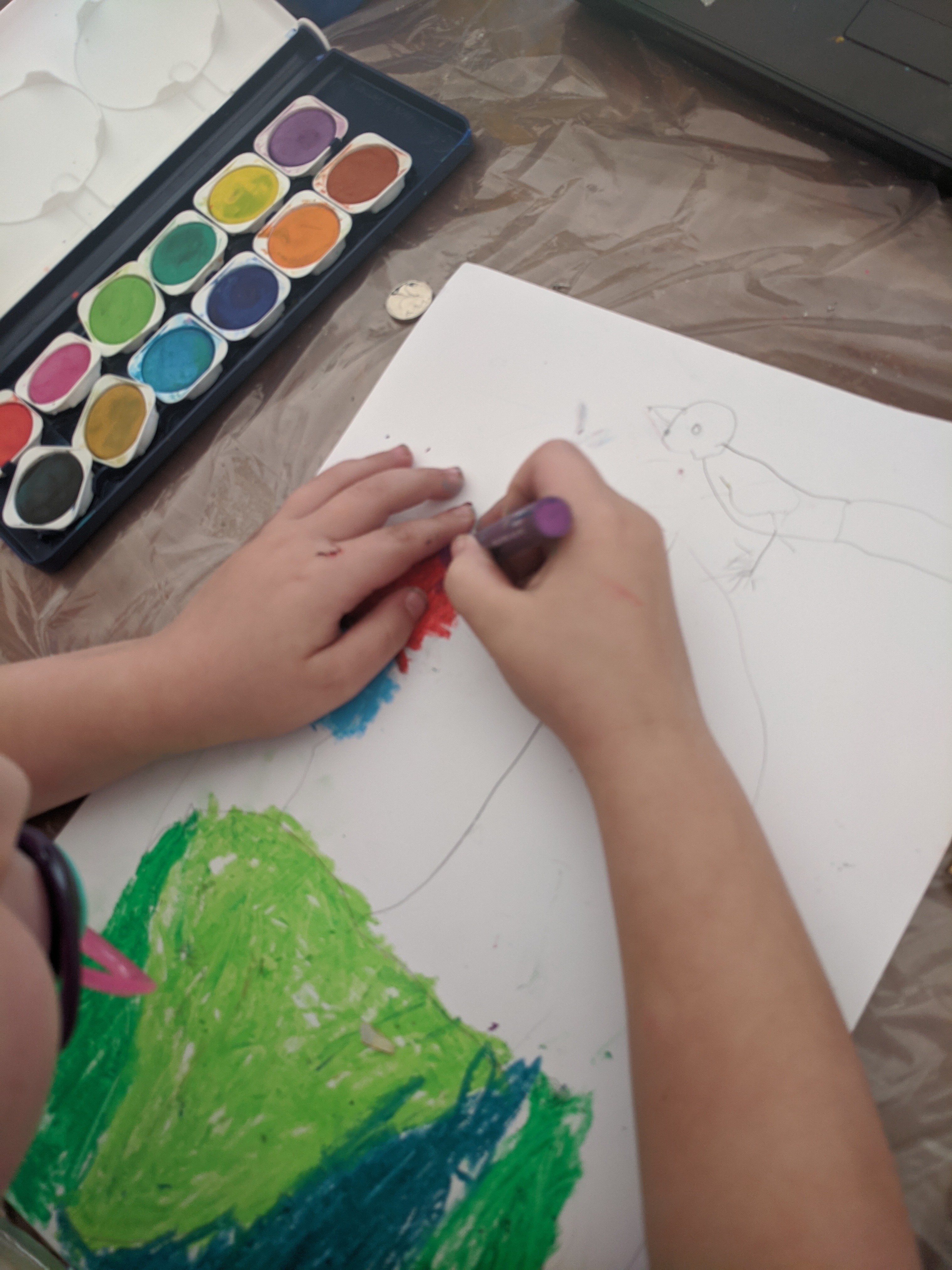
How do I know if my child has talent?

A lot of mothers get all hyped up about whether their child has talent or not. Truthfully, there's no need to worry.

Early on in my art teaching career, I realised art has nothing to do with talent and more about understanding and working on their skills consistently.

For instance, when teaching a tree I would explain why and how we draw a tree to resemble it in nature. From then on they would begin to look at the world around them and think before they drew anything. Mothers would tell me that every time they drew they would think about the way it should be drawn instead of just assuming a house should be drawn as a triangle and a square.

Also, I noticed that by kids working on their skills each week, inevitably they were going to get good at it.

Further, any time I fell for a parent telling me that their kid is so talented or that they had been to a ton of art classes before and skipped parts of my regular curriculum, it never worked.

I didn’t know what skills the child was missing and the child got frustrated as the level was often above them. 

After a few too many instances, I made a rule with myself that no matter what education or talent the child has, they all start at the beginning to make sure there are no gaps and no false expectations.

So how does a parent know if art education is the right thing for your child?

Here are a few things to look out for:

  • Does your child enjoy drawing things and coloring?
  • Can they sit for a period of time and enjoy painting and drawing?
  • Would they rather play ball outside or sit and color inside?

I have found that most kids enjoy drawing and painting, specifically through the highly stimulating lessons that Let’sartit! has. Although there are sometimes those kids that enjoy more active outlets and therefore, art may not be for them.

So don’t stress about whether your kid has talent or not- that comes with education. Just think whether they would enjoy sitting and drawing and painting. Once a child realises they can actually draw and paint anything because they’ve been taught how, that’s when they believe they have ‘talent’ and are proud of themselves as an artist.

What type of art education is right for my child?

With an array of methods available to teach your child art, from YouTube videos to in person classes, to guided self drawing books, there is a reason parents are confused as to what is the best method to actually get their child drawing and painting like an artist.

First up, let’s explain the difference between Crafts and art. Crafts are more geared towards allowing exploration and discovery of different materials and textiles. They are less restrictive, in the sense the possibilities are endless.

Art can utilize craft techniques but if you are looking for specifically learning how to draw and paint then here are the differences:

Guided drawing- drawing instruction that explains and shows step by step each drawing step. It ensures the child understands each step and can complete the exact picture.

Non- guided drawing- drawing that allows the child to draw however and whatever they feel like. Maybe based on a certain theme or with using a certain medium.

The same can be said for painting.

So which way is best for your child?

Good question. Well, now that you understand the differences in the ways of teaching art, you will be better equipped to know what to look for when finding the right art education for your child.

At Lets'artit! we use both methods. We believe that a child has to learn a skill or an objective for each lesson, but still allow for their freedom and creativity to come through.

For instance, we might focus on drawing cylindrical shapes, but they can choose how and what they want to include in the final artwork.

I will also explain and show how I would draw my project and then they can do their project using mine inspiration.

With younger kids, the guided drawing method is the right way to go at the beginning to ensure they are building up their drawing skills. Once they have built up their basic drawing skills it’s time to let them be a bit more free, show them how you do yours and then let them do their own. You know they have a basis to work from and have built up their skills. They are now more confident as a result and won’t nag you to draw something for them as they are now capable of drawing it. It’s like teaching someone to ride a bike, hold on to their bike as they take the first pedals and then let go and watch them ride.

It's a pretty cool thing to watch!

How do I know that my child is learning art properly?

Here are some tips to make sure your child is getting the best out of their art education:

  • Don’t worry about where the teacher studied art. Studying art and teaching art are two totally separate things and having a degree in art doesn’t necessarily make you able to teach art to kids (or adults).

Rather ask to see what other students have completed and ask the teacher these questions:


  • Do you draw on the child’s artwork? This is a big no, no. If the teacher draws or paints on the child's artwork, the child learns that their artwork has to be a certain way and their art is not worthy. They also aren’t learning how to do the art as the teacher doesn’t explain what to do, just does it for them.
  • Do you allow each child to express their creativity? If they wanted to do something a bit different from what you’ve shown do they let you? The reason why this is important is because art is so individual and it has to allow for the person’s creativity to shine through. Having them just to exactly as shown quashes all of their creativity and is not art. Nope, it’s not art.
  • Do you teach step by step? Do you ever just show what to do and then leave it up to the student to go through the process of creating their artwork? This is important as if the teacher is just showing step-by-step instructions, it shows a lack of ability to guide a student to complete an artwork that has others steps involved. You want your child to be their own artist and not just complete pretty artwork that looks nice on the wall, but she has no idea how to actually create their own painting.
  • Do you teach a variety of mediums? Just as each individual has personal tastes and preferences. Things they like and dislike, art is the same. Art is not about just teaching one medium and letting each child just learn one medium. Each child will enjoy using one medium or a few and it’s best to teach them all so they can choose which one they want to master. If a teacher only teaches one, that’s fine but maybe only keep your child there for a short amount of time and then switch them to a teacher that teaches different mediums and so on. At letsarit.com we teach a variety of mediums so students get to enjoy learning about all of them and understand it’s properties and how they can use them in art.


Is it true that anyone, even young kids from the age of four can learn how to draw?

Yes!!

Yes, it’s possible.

How, you ask?

Let’s explain. Drawing is the ability to see the outlines of an object and replicate and draw that on your paper. How do you get to be able to see this? By training your brain to just see those lines. There are several methods to doing so and anyone can do so.

With younger kids, we break it down to teaching them to understand what they are drawing and to think before they draw. We all have ideas of how to draw a house, a tree, etc, but if we think about what does a house actually look like, what does a tree look we understand that every tree and house looks different and we need to observe and draw what we see not what we think.

With painting, it’s teaching the technical skills of mixing colors, blending, the process of painting on canvas, how different paint mediums work.

As with any skill, practice makes perfect.

The more you or your child practices their drawing skills the better they will get. Art lessons each week can do that, or they can practice on their own.

The difference between those who can draw with ease and those who can’t is just time and practice.

So yes, anyone can learn to draw.

Why does it make a difference if my child can draw and paint?

Yes, why does it?

When an artist has the fundamental skills to know how to draw and paint, they feel more confident and are eager to pursue things that scare them in art.

Lacking the ability to paint and draw can hinder their growth and forever have them thinking their artwork is not worth it.

Further, teaching a child a skill like knowing how to paint and draw can do wonders for their confidence. A lot of school projects require drawing and painting skills and having the knowledge can make a child favored by many of their friends and give them confidence and healthy self-esteem for life.